EMERGENCy & NEW PATIENTS Welcome!

Whiter Smile Hacks: At-Home vs. Professional Teeth Whitening


A bright, white smile is a confidence booster. It can light up your face and make you feel more attractive. But if your teeth are stained or discolored, achieving that pearly white grin can seem like a daunting task.
This blog delves into the world of teeth whitening, exploring both at-home and professional options. We’ll compare their effectiveness, safety, and cost to help you decide which approach is right for you.
Understanding Teeth Discoloration: Why Does Our Smile Fade?
Before diving into whitening methods, it’s helpful to understand why teeth lose their whiteness. Here are some common culprits for tooth discoloration:
- Diet: Certain foods and drinks like coffee, tea, red wine, and dark berries can stain teeth over time.
- Smoking and Tobacco Use: Tobacco products stain teeth and contribute to yellowing.
- Age: Enamel, the hard outer layer of teeth, naturally thins with age, allowing the dentin underneath to show through, which is a yellowish color.
- Medications: Certain medications can lead to tooth discoloration as a side effect.
- Trauma or Injury: A tooth injury can disrupt blood flow to the tooth, causing it to darken.
At-Home Teeth Whitening: A Convenient (and Sometimes Messy) Approach
At-home whitening offers a convenient and readily available option for achieving a whiter smile. Here’s a breakdown of some popular at-home methods:
- Whitening Toothpaste: These toothpastes contain mild abrasives and low-concentration peroxide to gently remove surface stains. They can be helpful for maintaining a bright smile after professional whitening, but they aren’t powerful enough for dramatic whitening results.
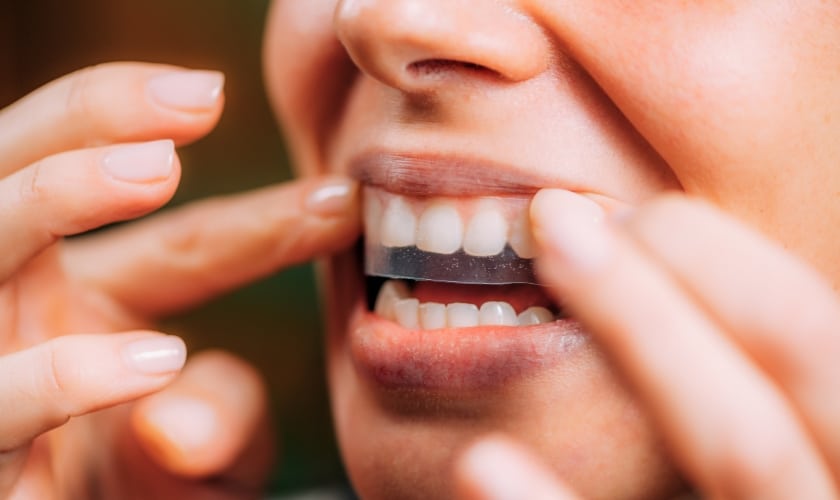
- Whitening Strips: These thin, flexible strips are coated with a bleaching agent like hydrogen peroxide or carbamide peroxide. You apply the strips to your teeth for a designated time each day. Whitening strips offer a more noticeable whitening effect compared to toothpaste, but results can be uneven and may take several weeks.
- Whitening Gels and Trays: These kits typically involve a custom-fitted tray that holds a whitening gel containing peroxide. You wear the trays for a specific time each day. While these kits offer more control and can achieve good results, creating custom trays might require an initial dental visit.
- Over-the-Counter Whitening Rinses: These rinses often contain peroxide at low concentrations. While they can offer a slight brightening effect, rinses alone aren’t very effective for whitening.
At-Home Whitening: Benefits and Drawbacks
Here’s a closer look at the pros and cons of at-home whitening:
Benefits:
- Convenient and readily available: At-home products are easily accessible in stores or online.
- Relatively affordable: At-home whitening options are generally less expensive than professional treatments.
- Control over treatment: You can control the frequency and duration of your whitening sessions at home.
Drawbacks:
- Limited Effectiveness: At-home products typically contain lower concentrations of bleaching agents compared to professional treatments, leading to slower and less dramatic results.
- Uneven Bleaching: It can be challenging to achieve consistent whitening across all teeth with at-home methods.
- Sensitivity: Some people experience tooth sensitivity while using at-home whitening products. This is usually temporary, but it can be uncomfortable.
- Potential for Gum Irritation: Improper use of at-home whitening products can irritate the gums.
- Safety Concerns: Some at-home whitening products may contain harsh ingredients that could damage teeth if not used correctly.
Professional Teeth Whitening: A Faster Route to a Brighter Smile
Professional teeth whitening treatments offered by a dentist deliver more dramatic and long-lasting results. Here’s what to expect:
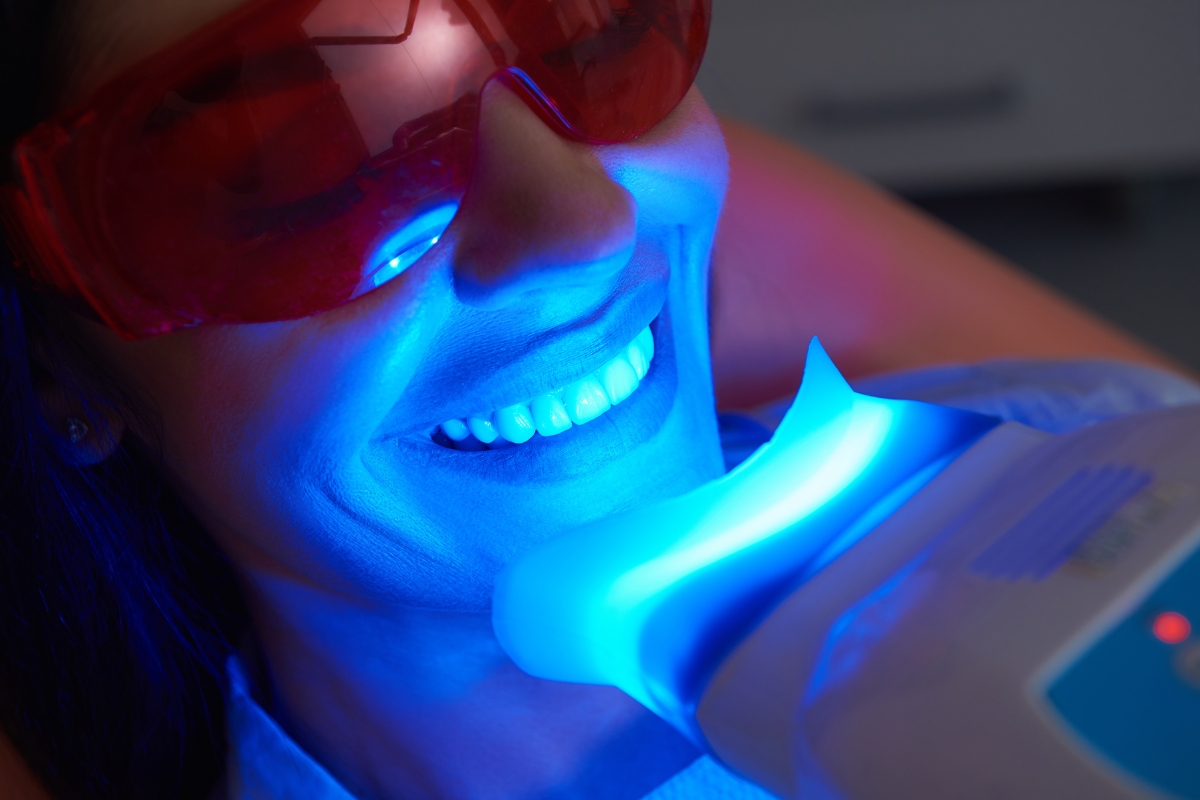
- In-Office Whitening: This procedure involves applying a concentrated bleaching gel to the teeth, often activated with a laser or light source. In-office teeth whitening is a faster process, and results can be achieved in a single appointment.
- Take-Home Trays with Professional-Grade Gel: Your dentist will create custom-fitted trays for you and provide a professional-strength whitening gel. You wear the trays at home for a designated time each day.
Professional Teeth Whitening: Benefits and Drawbacks
Let’s explore the advantages and disadvantages of professional teeth whitening:
Benefits:
- Faster and More Dramatic Results: Professional whitening treatments use higher concentrations of bleaching agents, leading to a whiter smile in a shorter timeframe.
- Even Whitening: Dentists ensure the whitening gel is applied evenly across all teeth, achieving a consistent and natural-looking result.
- Reduced Sensitivity: Dental professionals can provide guidance and techniques to minimize tooth sensitivity during treatment.
- Safer and More Effective: Dentists use professional-grade products and monitor the treatment process, ensuring safety and effectiveness.
- Personalized Treatment: Your dentist can assess your individual needs and recommend the most suitable whitening option based on your goals and sensitivity.
Drawbacks:
- Higher Cost: Professional whitening treatments are generally more expensive than at-home options.
- Less Convenient: Professional whitening might require multiple visits to the dentist.
- Not Suitable for Everyone: People with certain dental conditions or gum disease might not be good candidates for professional whitening.
Choosing the Right Whitening Option for You: A Guide
Knowing your priorities and your smile goals can help you decide between at-home and professional whitening:
- For a Slight Brightening or Smile Maintenance: If you want a subtle whitening effect or need to maintain your white smile after professional treatment, at-home whitening toothpaste or strips might be sufficient.
- For Faster and More Dramatic Results: If you desire a significantly whiter smile in a shorter timeframe, professional in-office whitening or take-home trays with professional-grade gel are recommended.
- For Safety and Expertise: If you have concerns about sensitivity or existing dental issues, professional whitening is the safer and more reliable option. Your dentist can guide you through the process and ensure it’s suitable for your oral health.
Beyond Whitening: Maintaining a Bright Smile
Here are some tips to maintain a white smile and prevent future stains:
- Brush twice daily and floss once daily: This removes plaque and food particles that can contribute to staining.
- Limit staining foods and drinks: Enjoy coffee, tea, and red wine in moderation, and rinse your mouth with water after consuming them.
- Don’t smoke or use tobacco products: Tobacco use not only stains teeth but also contributes to a host of other health problems.
- Schedule regular dental cleanings: Professional cleanings remove surface stains and tartar buildup, helping to maintain a bright smile.
A Dazzling Smile Starts with Healthy Habits
Achieving and maintaining a white smile requires a two-pronged approach: professional whitening treatments can provide a dramatic boost, while good oral hygiene habits are essential for long-lasting results. Talk to your Denver dentist to discuss your whitening goals and explore the best options for you. Remember, a healthy smile is a beautiful smile, and with the right approach, you can achieve the confidence-boosting whiteness you desire.
Bonus Tip: Consider lifestyle factors that can impact your smile’s whiteness, such as excessive use of mouthwash containing alcohol or certain medications. Your dentist can advise you on these elements as well.